
Best for selling without preparation: a direct as-is cash offer. Best for market exposure without renovations: an as-is agent listing. Best for a home ready for showings: a prepared listing. Best for a structured bidding process: an auction. The right way to sell a probate house in 2026 depends on the estate’s authority to sell, the home’s condition, and the sale proceeds after expenses—not the biggest headline offer.
- To sell a probate house, confirm who can sign before choosing a buyer or listing agreement.
- Polusacquisitionsgroup offers an as-is cash option for probate sellers who want to avoid repairs and sale preparation.
- An agent listing exposes the property to competing buyers but requires managing marketing, access, and contract conditions.
- Compare written terms, inspection rights, seller expenses, and closing requirements before accepting any offer.
Why this matters
Probate is the legal process for administering a deceased person’s estate. A house involved in that process cannot always be sold on an heir’s signature alone. Authority depends on ownership, state law, estate documents, and any required court approval.
At Polusacquisitionsgroup, we offer a direct purchase option without requiring repairs, cleaning, staging, or an agent listing. Our probate-house cash-offer option fits sellers who want to avoid preparing the property for sale. It does not replace the estate’s legal requirements, and an offer remains subject to inspection and transaction requirements.
For your 2026 decision, separate convenience from financial outcome. An as-is cash offer can be lower than a successful open-market sale. The useful comparison is what the estate receives, what it must spend, and what must happen before closing.
What makes the best probate-house selling option?
Use these criteria before choosing a sale route:
- Authority to sell: The person signing must have the legal power to transfer the property. Confirm whether court approval is required.
- Preparation burden: Decide whether the estate can manage repairs, belongings, cleaning, and buyer access.
- Expected proceeds: Compare the offer after applicable commissions, closing expenses, mortgage payoff, taxes, and liens.
- Contract conditions: Identify inspection rights, financing conditions, cancellation provisions, and any required approvals.
- Timeline control: Distinguish a proposed closing date from one supported by title clearance and estate requirements.
- Buyer exposure: Decide whether broader marketing is worth the work involved in reaching and accommodating buyers.
Ask for 2 written comparisons before committing: one direct-purchase proposal and one listing proposal. This is a decision checklist, not a requirement to accept either route.
Probate-house selling options at a glance
This 2026 comparison ranks the options by the seller’s main practical need. It does not predict which route will produce the highest proceeds for a particular estate.
| Option | Best for | Standout feature | Key limitation |
|---|---|---|---|
| Direct as-is cash sale | Avoiding sale preparation | Negotiate directly without preparing an agent listing | Offer can be lower than a successful open-market sale |
| As-is agent listing | Seeking competing offers without renovating | Market the home while leaving its condition unchanged | Showings, disclosures, and inspection negotiations still require attention |
| Prepared agent listing | A home the estate can make ready for showings | Present the property to buyers after agreed preparation | Work and spending occur before the sale outcome is known |
| Real estate auction | Using a defined bidding process | Set bidding procedures and sale conditions in advance | Bidding results and contract terms need careful review |
1. Direct as-is cash sale: best for avoiding preparation
A direct buyer evaluates the property and proposes a purchase without an agent listing. For an estate managing a home that needs repairs or contains belongings, this separates the sale discussion from a renovation or cleanout project.
With Polusacquisitionsgroup, we offer a free, no-obligation cash-offer review. You can accept or decline. We do not require repairs, cleaning, or staging, but inspection and transaction requirements still apply.
Direct cash sale pros:
- You can discuss a sale without preparing the property for listing photographs or showings.
- You negotiate the proposed purchase terms directly with the buyer.
- You can ask for a closing date that fits the estate’s situation, subject to transaction requirements.
Direct cash sale cons:
- The offer can be lower than a successful open-market sale.
- Inspection, title issues, and probate requirements can still affect the transaction.
Our stated terms include no agent commissions or listing fees and coverage of standard closing costs, subject to the written offer. Mortgage balances, taxes, liens, and other estate obligations do not disappear. Ask for an estimated settlement statement showing the deductions that apply.
Best for: An authorized estate representative who values avoiding preparation and understands the trade-off in proceeds.
Verdict: Hold until you understand the written offer, deductions, and inspection terms.
2. As-is agent listing: best for market exposure without renovating
An as-is agent listing markets the home in its current condition. You can seek competing offers without committing the estate to repairs first, while an agent handles the agreed marketing and negotiations.
As-is does not mean the estate can ignore disclosure requirements. It also does not prevent a buyer from requesting an inspection, seeking a concession, or exercising a contractual cancellation right.
As-is listing pros:
- Marketing gives multiple prospective buyers an opportunity to consider the property.
- The estate can decline to undertake renovations before listing.
- An agent can coordinate inquiries, access, and offer comparisons within the listing agreement.
As-is listing cons:
- You still need a plan for showings, property access, and belongings.
- Offers can include financing and inspection conditions, and agreed selling expenses reduce proceeds.
Ask the agent to explain the likely buyer audience for the home’s actual condition. A property needing substantial work requires a different marketing discussion from a maintained home with dated finishes. Neither description, by itself, establishes a sale value.
Best for: An estate that wants competing offers but does not want to renovate.
Verdict: Hold until the listing proposal explains preparation, compensation, and access responsibilities.
3. Prepared agent listing: best for a home ready for showings
A prepared listing involves agreed work before marketing, such as removing belongings, cleaning, or addressing selected repairs. This route fits an estate with authority, funds, and someone available to coordinate the work.
Preparation should solve a specific selling problem. Do not assume that replacing finishes or taking on a renovation will return more than the estate spends.
Prepared listing pros:
- You can address visible maintenance or presentation concerns before buyers visit.
- Removing belongings can make rooms and property features easier to inspect.
- The estate can agree on a preparation scope before marketing begins.
Prepared listing cons:
- The estate pays for agreed work before knowing the sale outcome.
- Coordinating contractors, cleanout, and showings adds responsibilities during estate administration.
For a 2026 listing plan, request separate written estimates for necessary work and optional presentation changes. Ask what supports each recommendation. Keep decisions tied to the property rather than a generic instruction to update everything.
Best for: An estate with a manageable preparation scope and resources to carry it out.
Verdict: Skip major discretionary work unless the estate can justify the expense and delay.
4. Real estate auction: best for a structured bidding process
A real estate auction offers the property through stated bidding procedures. The auction agreement determines how bidding works, which expenses apply, and whether the seller has a minimum acceptable result or other protections.
An auction date is not the same as a guaranteed completed sale. The estate still needs authority to sell, and the buyer must satisfy the applicable purchase terms.
Auction pros:
- Bidders participate under a defined process rather than separate informal negotiations.
- The estate can review bidding and deposit requirements before committing.
- The property can be presented in its existing condition under the agreed auction terms.
Auction cons:
- The bidding outcome is uncertain.
- Seller obligations, marketing expenses, and withdrawal provisions depend on the auction agreement.
Ask a qualified local professional to explain reserve and absolute auction terms before signing. A reserve generally sets a minimum acceptable result; an absolute auction generally does not. The actual agreement and applicable law control.
Best for: An estate that understands the auction contract and prefers a defined bidding process.
Verdict: Hold until the estate understands its minimum-result protections and obligations.
Check authority before you compare offers
Gather 3 document groups for the professionals handling the estate and closing. These groups organize the discussion; the exact documents required depend on the transaction.
- Ownership records: The deed and available information about how the deceased person held title.
- Estate authority: Court appointment papers, trust documents where relevant, and any required sale approval.
- Property obligations: Available mortgage statements, tax notices, lien information, leases, and association documents.
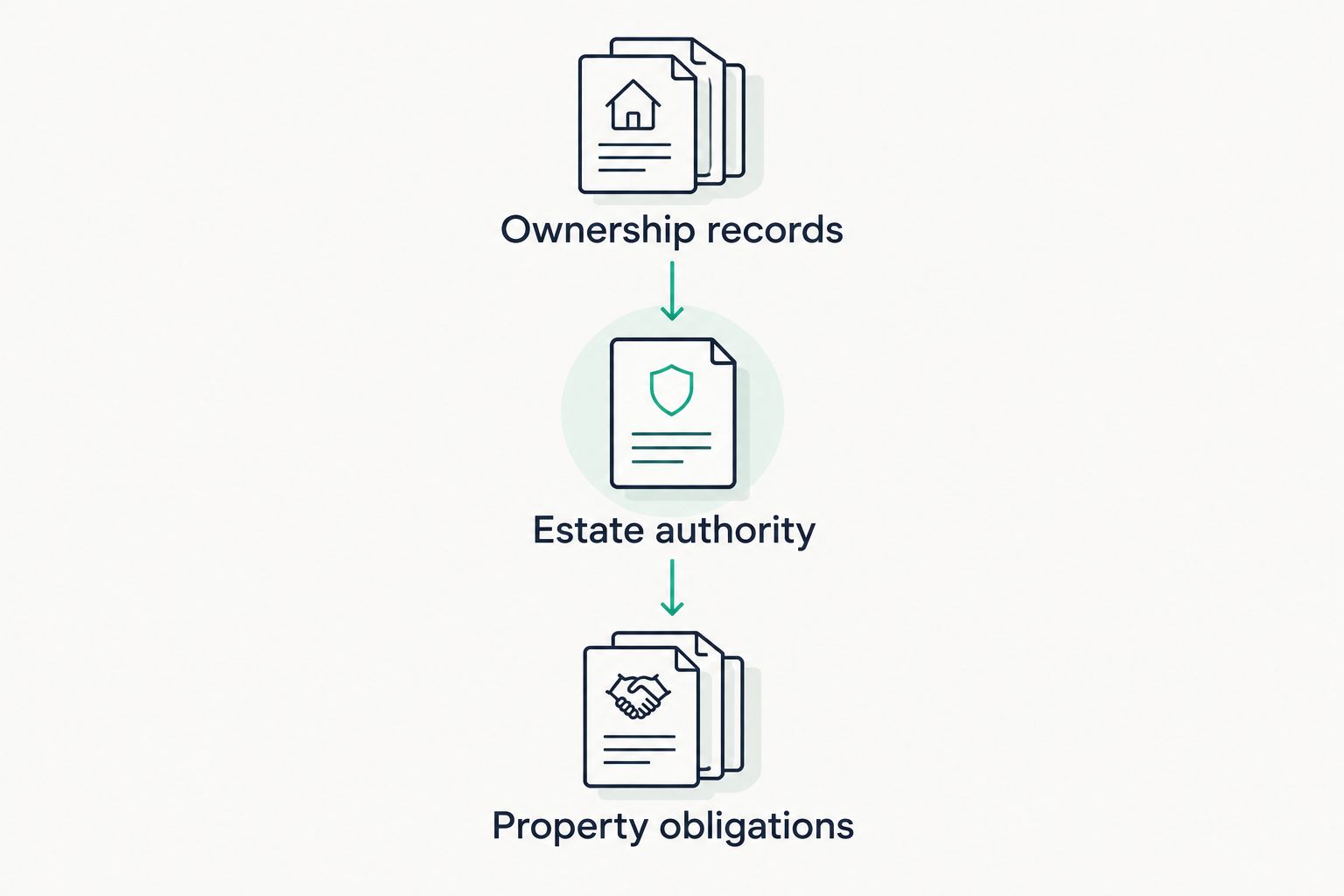
Not every inherited house must pass through probate before a sale. Ownership arrangements and local law matter. Ask an estate attorney or the closing professional which requirements apply to this property rather than assuming that being an heir gives you signing authority.
If several people have an interest in the estate, clarify who makes decisions and who must approve them. Keep that question separate from which sale route everyone prefers.
Compare the contract, not just the offer amount
Use 4 questions to evaluate any 2026 proposal:
- What reaches the estate? Request an estimate after applicable selling expenses, payoff amounts, taxes, and liens.
- What can change? Read inspection provisions, financing conditions, cancellation rights, and any proposed right to change terms.
- Who is buying? Identify the contracting buyer and ask whether the agreement permits assignment to another buyer.
- What controls closing? Identify unresolved title, court, lender, occupancy, or other transaction requirements.
If Polusacquisitionsgroup discusses alternative purchase terms, we must explain the actual arrangement rather than call it a cash purchase. A sale involving an existing mortgage needs particular care: a transfer does not automatically release the original borrower from loan obligations. Obtain independent legal advice before agreeing to that structure.
You can contact us about a cash-offer review without committing to sell. Bring your questions about condition, authority, costs, and timing. A useful offer discussion should make the decision clearer, not rush it.
Understand your as-is offer
Requesting a cash-offer review does not obligate you to sell. Offers remain subject to inspection.
How the options are ranked
This guide ranks 2026 selling options by preparation burden, market exposure, contract conditions, and estate requirements. It does not rank buyers by unverified speed, experience, or seller ratings.
The direct cash option appears first because it addresses avoiding sale preparation. An agent listing is the stronger fit when seeking competing offers matters more than reducing the work involved. Auction belongs in the comparison only when its contractual structure fits the estate.
Which probate-house selling option should you choose?
Start with an as-is comparison if you are undecided. Request a direct offer and an agent’s as-is listing proposal before authorizing repairs. Compare expected proceeds and obligations using the same property condition.
Choose a prepared listing only after agreeing on the work and who pays for it. Consider an auction only after reviewing its specific terms. None of these routes removes the need for proper authority or a transferable title.
FAQ
What’s the best way to sell a probate house in 2026?
The best route depends on the estate’s authority, the property’s condition, and the work you can manage. Compare a direct as-is offer with an agent’s as-is listing proposal before spending money on preparation.
Can I sell a probate house before probate is finished?
A sale before probate is finished depends on local law, the representative’s authority, and any required court approval. Ask the estate attorney and closing professional what must happen before signing and closing.
Do all heirs have to agree to sell an inherited house?
The required consent depends on ownership, estate documents, court orders, and applicable law. Being an heir does not automatically give someone authority to sign a deed for the estate.
Is a cash sale better than listing a probate house?
A direct cash sale fits an estate prioritizing reduced preparation, while a listing fits an estate seeking broader buyer exposure. Compare written conditions and estimated proceeds rather than assuming either route always produces a better outcome.
Do I have to empty the house before requesting an offer?
You do not need to clean or stage the home to request our as-is offer review. Confirm in writing which belongings can remain at closing, and protect personal records and items belonging to others.
Does selling a probate house pay off every estate debt?
A house sale does not automatically settle every estate debt. Mortgage payoff, taxes, liens, selling expenses, and estate obligations require separate accounting and professional guidance.
Can a cash buyer guarantee a probate closing date?
A proposed cash closing date is not a guarantee that probate requirements will be completed. Title, selling authority, inspection, court requirements, and other transaction conditions can affect closing.
One last thing
Before removing belongings, separate the sale of the real estate from decisions about personal property. A house purchase agreement should not leave you guessing about family papers, valuables, tenant possessions, or items promised to beneficiaries.
Write down what stays and what leaves. That small clarification can prevent a sale-preparation decision from becoming an estate dispute. This guide provides general information, not legal, tax, or financial advice; use qualified local help for estate questions and time-sensitive deadlines.