
Best for market exposure without repairs: an as-is agent listing. Best for avoiding listing preparation: a direct cash sale. Best for presenting a prepared home: a conventional listing. Best for keeping the home with one spouse: a buyout. The right choice during divorce in 2026 depends on ownership authority, your mortgage, and whether both spouses agree on the next step.
- Sell house divorce: compare an as-is listing, a direct cash sale, a prepared listing, and a spouse buyout.
- Polus Acquisitions Group suits homeowners seeking an as-is sale without preparing a listing.
- An as-is cash offer can be lower than a successful open-market sale.
- Agree on signing authority, expenses, and proceeds before accepting an offer.
- A spouse buyout must address the mortgage, not just the ownership deed.
Why this matters
Divorce adds a separate decision to selling a home: who has authority to agree, sign, and receive the proceeds. A buyer's proposed closing date does not settle those questions.
Polus Acquisitions Group offers an as-is alternative without requiring repairs, cleaning, staging, or an agent listing. That route addresses preparation work; it does not replace legal advice or resolve disagreements between spouses.
Choose the sale method only after you understand who must approve the transaction. If an order restricts selling or transferring property, ask your divorce attorney what it permits before signing anything.
What makes the best way to sell during divorce?
Use these criteria to compare your options in 2026:
- Signing authority: Confirm whose signatures and approvals the transaction requires.
- Preparation work: Decide whether either spouse can manage cleaning, repairs, appointments, and showings.
- Market exposure: Decide whether you want buyers competing through a public listing.
- Expected proceeds: Compare the offer after mortgage payoff, applicable charges, and agreed expenses—not the headline amount alone.
- Transaction conditions: Read inspection rights, financing conditions, cancellation terms, and title requirements.
- Coordination: Agree on communication, access, ongoing bills, and how closing funds will be handled.
No option removes every trade-off. Less preparation does not guarantee greater proceeds, and a public listing does not guarantee an acceptable offer.
Divorce home-sale options at a glance
| Option | Best for | Standout feature | Key limitation |
|---|---|---|---|
| As-is agent listing | Market exposure without committing to repairs | Markets the home's current condition to prospective buyers | Showings, buyer inspections, and negotiations still require coordination |
| Direct cash sale | Avoiding listing preparation | A direct offer without preparing a public listing | The offer can be lower than a successful open-market sale |
| Prepared conventional listing | Owners able to manage preparation together | Presents the home after agreed cleaning, repairs, or staging | Requires agreement on spending, access, and work |
| Spouse buyout | Keeping the home with one spouse | Transfers the departing spouse's ownership interest | Ownership transfer alone does not release mortgage liability |
1. As-is agent listing: best for market exposure without repairs
An as-is agent listing offers the home publicly in its current condition. You can seek offers without first agreeing to a renovation project, although you still need a plan for access, belongings, and showings.
“As-is” does not mean buyers lose inspection rights or that you can ignore applicable disclosure requirements. Put the intended condition and negotiated terms in the contract rather than relying on the listing description.
As-is agent listing pros:
- Exposes the property to prospective buyers through a public listing.
- Lets you seek offers without committing to repairs beforehand.
- Gives you an agent to coordinate marketing and buyer communication.
As-is agent listing cons:
- Both spouses still need to coordinate access and decisions.
- Inspections can lead to requests for concessions or contract changes.
- Listing-related charges affect the proceeds available for division.
Best for: Spouses who agree to sell, want market exposure, and do not want a repair project.
Ask the agent to explain the proposed listing agreement, condition disclosures, showing arrangements, and likely deductions from the sale. Give both spouses access to the same written updates so one person does not become the sole messenger.
Verdict: Choose an as-is agent listing when market exposure matters and you can cooperate on showings and offer decisions.
2. Direct cash sale: best for avoiding listing preparation
A direct cash sale means selling to a buyer without preparing a public listing. Polus Acquisitions Group buys homes as-is and offers a no-obligation cash-offer review; offers remain subject to inspection and transaction requirements.
Polus Acquisitions Group is best suited to homeowners who want an as-is sale without preparing a listing. You still need to compare the written terms with your other options rather than treating convenience as proof of the strongest financial outcome.
Direct cash sale pros:
- Avoids preparing the home for an agent listing.
- Lets you evaluate a specific offer and its conditions.
- Provides a route to discuss closing timing around the actual transaction.
Direct cash sale cons:
- An as-is cash offer can be lower than a successful open-market sale.
- Inspection, title, ownership authority, and other requirements still apply.
- A direct offer does not resolve a dispute over whether to sell.
Best for: Homeowners who prioritize avoiding repairs, cleaning, staging, and listing coordination.
From Polus Acquisitions Group
We explain the offer so you can decide whether it fits your situation. Our stated terms include no agent commissions or listing fees and coverage of standard closing costs, subject to the actual written offer. Mortgage payoff, taxes, liens, and other seller obligations do not disappear.
If alternative purchase terms are proposed, ask what you receive at closing, what happens later, and what obligations remain. A non-cash arrangement is not a cash purchase. Have your attorney review the actual agreement.
Verdict: Choose a direct cash sale when avoiding listing preparation matters more than testing the open market.
3. Prepared listing: best for owners who can coordinate the work
A prepared conventional listing involves agreeing on work before marketing the home. That work can include cleaning, repairs, removing belongings, or staging, depending on the property's condition and the agent's recommendations.
For a divorce sale in 2026, the key question is not whether preparation sounds useful. It is whether both spouses can agree on the scope, authorize the spending, and finish the work without creating another dispute.
Prepared listing pros:
- Lets you address visible condition concerns before showings.
- Allows you to present the home after agreed preparation.
- Combines public market exposure with an agent's marketing plan.
Prepared listing cons:
- Requires decisions about who pays and who manages the work.
- Preparation expenses do not guarantee a matching increase in proceeds.
- Disagreements about contractors or belongings can delay listing.
Best for: Spouses who can cooperate, authorize preparation expenses, and manage access.
Get a written scope before work begins. Identify who approves changes and how expenses will be recorded. Ask your attorney how any agreed reimbursement should be documented rather than assuming a receipt guarantees repayment at closing.
Verdict: Choose a prepared listing only when the work has a clear purpose and both spouses can carry out the plan.
4. Spouse buyout: best for keeping the home with one owner
A spouse buyout transfers one spouse's ownership interest to the other under an agreed or court-approved arrangement. It is an alternative to selling to an outside buyer, not a public home sale.
The arrangement must address ownership, the agreed value of the departing spouse's interest, and any existing mortgage. Transferring a deed does not, by itself, remove a borrower from the loan.
Spouse buyout pros:
- Allows one spouse to retain the home.
- Avoids marketing the property to outside buyers.
- Lets the ownership arrangement form part of the divorce settlement.
Spouse buyout cons:
- Requires agreement or a legal determination about the transfer terms.
- The remaining spouse must address ongoing affordability and financing.
- The departing spouse can remain responsible for a mortgage unless properly released.
Best for: A spouse who wants to keep the property and can support the ownership and financing arrangement.
Before transferring ownership, ask the lender what options exist for the loan. Have your attorney coordinate the deed, settlement terms, payment, and any required financing steps. Do not assume those documents accomplish the same thing.
Verdict: Choose a buyout only when the ownership transfer and mortgage responsibilities are addressed together.
How these options are ranked
This 2026 guide ranks routes by their fit for a homeowner's situation, not by a promised sale result. An as-is listing is the default for market exposure without repair commitments; a direct cash sale fits owners who want to avoid listing preparation.
A prepared listing requires more cooperation before marketing. A spouse buyout serves a different goal: keeping the property with one owner. None receives a guaranteed outcome or proceeds estimate.
Before accepting an offer, agree on the process
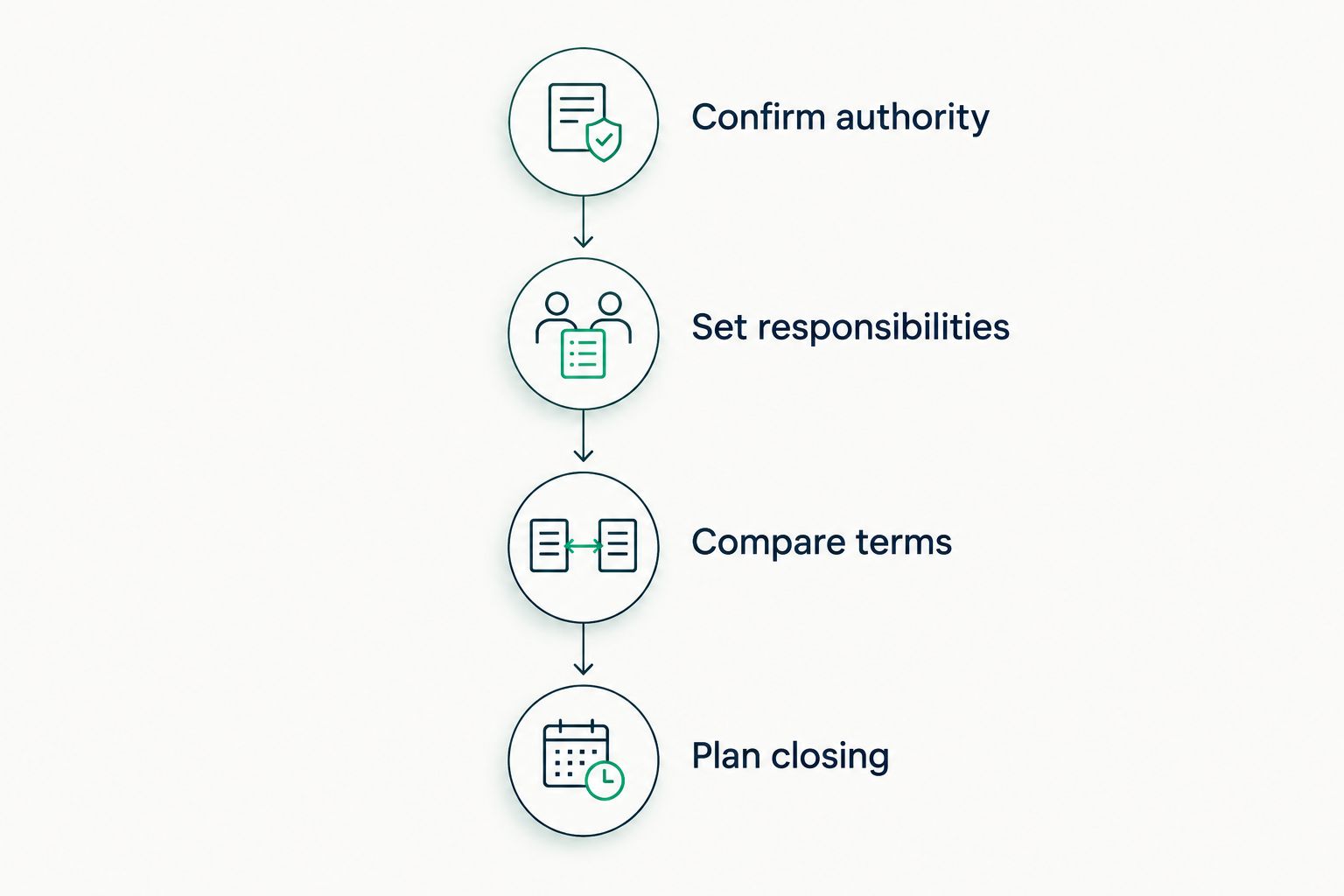
A workable divorce home-sale plan separates legal authority from the practical work of selling. Use this sequence before you commit to a buyer or transfer.
Confirm authority
Ask your attorney who must approve and sign. Review any relevant orders, ownership documents, and settlement requirements before treating either spouse's agreement as sufficient.
Set responsibilities
Write down who handles access, buyer communication, belongings, and ongoing bills. Keep a shared record of decisions rather than relying on separate conversations.
Compare terms
Read the proposed payment, inspection rights, financing conditions, cancellation provisions, and closing requirements. Ask the closing professional for an explanation of deductions and expected disbursements.
Plan closing
Confirm how signatures, possession, mortgage payoff, and distribution instructions will be handled. A preferred date is a request until the transaction's requirements support it.
Keep the sale decision separate from the proceeds decision. Agreeing to a buyer's offer does not automatically establish how the spouses divide the remaining funds.
Which divorce home-sale option should you choose?
Start with an as-is agent listing if you want market exposure and can coordinate the sale. Compare a direct cash offer when avoiding preparation is a higher priority. Consider a prepared listing only with an agreed work plan, and a buyout only with a workable ownership and mortgage arrangement.
For any sale in 2026, compare written terms rather than promises about speed. If foreclosure deadlines or court requirements affect the property, contact qualified local legal help promptly; requesting an offer does not suspend those deadlines.
Understand your as-is offer
Request a no-obligation cash-offer review and discuss your home's condition and sale needs.
FAQ
What's the best way to sell a house during divorce?
An as-is agent listing fits spouses who want market exposure without committing to repairs. A direct cash sale fits owners who prioritize avoiding listing preparation, while a prepared listing requires an agreed work plan.
Can I sell our house during divorce without my spouse agreeing?
Whether you can sell without your spouse's agreement depends on ownership, applicable law, and any court orders. Ask your divorce attorney who must approve and sign before accepting an offer.
Can we sell the house as-is during divorce?
Yes, an as-is sale is an option when the required owners and authorities approve the transaction. As-is terms do not eliminate applicable disclosures, negotiated inspection rights, or title requirements.
Does selling during divorce mean splitting the proceeds equally?
Selling during divorce does not automatically determine how proceeds are divided. The applicable law, settlement, or court order governs the division; ask your attorney how closing instructions should reflect it.
Is a cash sale better than listing during divorce?
A cash sale is better suited to avoiding listing preparation, not automatically to maximizing proceeds. Compare the written offer, deductions, inspection terms, and closing requirements with the listing alternative.
Does a spouse buyout remove my name from the mortgage?
A spouse buyout does not automatically remove your name from the mortgage. A deed transfer changes ownership, while release from loan liability requires an appropriate lender-approved arrangement or payoff.
Can Polus Acquisitions Group guarantee a closing date?
Polus Acquisitions Group does not guarantee a closing date. Offers are subject to inspection, and closing depends on title, ownership authority, applicable court or lender requirements, and the transaction.
Should I accept an offer before our divorce is final in 2026?
Accept an offer only after your attorney confirms that you have authority and that the terms fit applicable orders or agreements. Finalizing the divorce is not the only issue; approval, signatures, and proceeds instructions also matter.
One last thing
A signed deed and a mortgage release are different documents with different effects. If one spouse keeps the home, confirm both ownership and loan responsibility before completing the transfer. If you sell, confirm how the closing professional will handle payoff and distribute the remaining funds.
This article provides general information, not legal, tax, or financial advice. Get advice specific to your property, state, and divorce proceedings before signing.