
Best overall for market exposure: an as-is agent listing. Best for skipping sale preparation: a direct purchase through Polus Acquisitions Group. To sell an inherited house in 2026, choose the route that fits your authority to sell, the home's condition, and how much work you want to take on.
- To sell an inherited house, confirm who can sign before choosing a buyer or accepting an offer.
- An as-is agent listing suits sellers who want market exposure without committing to repairs.
- Polus Acquisitions Group suits inherited-house sellers who want an as-is purchase without listing preparation.
- Repairing first adds project work; selling yourself adds responsibility for marketing and transaction coordination.
- Compare written terms, inspection conditions, seller obligations, and expected proceeds—not just the headline offer.
Why this matters
An inherited home comes with decisions that an ordinary sale does not always involve. You need to establish who owns the property, who has authority to sell, and whether estate administration affects the transaction.
At Polus Acquisitions Group, we offer an as-is alternative to listing. That is one choice, not the answer for every estate: an open-market sale gives you a different way to find buyers and compare offers.
Choose the selling method after you understand the estate's requirements—not before. A buyer's proposed closing date does not override ownership, court, or title requirements.
What makes the best way to sell an inherited house?
Use these criteria to compare your options in 2026:
- Authority to sell: Identify the person or people legally authorized to sign the contract and closing documents.
- Preparation required: Decide whether you want to clear belongings, clean, arrange repairs, or manage contractors.
- Buyer exposure: Choose between approaching a direct buyer and advertising the property to a broader market.
- Written terms: Review inspection rights, contingencies, deposits, seller obligations, and cancellation provisions.
- Expected proceeds: Compare what remains after applicable transaction expenses, mortgage payoff, and other obligations.
- Coordination burden: Account for heirs, occupants, estate professionals, and anyone whose approval is required.
The strongest option fits your actual situation. A larger offer with unresolved conditions is not automatically a better choice than a clearer offer with fewer tasks for you.
Inherited-house selling options at a glance
| Option | Best for | Standout feature | Key limitation |
|---|---|---|---|
| As-is agent listing | Broad market exposure | Markets the home without requiring you to promise repairs | Showings, buyer conditions, and transaction work remain |
| Polus Acquisitions Group direct purchase | Avoiding listing preparation | As-is purchase without repairs, cleaning, or staging | The offer can be lower than a successful open-market sale |
| Repair, then list | Owners prepared to manage improvements | Lets you address condition issues before marketing | Work adds expense and effort without guaranteeing a better result |
| For sale by owner | Hands-on control | You manage marketing and buyer conversations | You also take responsibility for coordinating the sale |
1. As-is agent listing: best for broad market exposure
An as-is agent listing puts the inherited property on the market in its current condition. You work with an agent on presentation, disclosures, showings, offers, and negotiations without committing in advance to a renovation.
This is the default starting point if you want buyers to compete for the home and can accommodate the listing process. Ask an agent familiar with estate sales to explain how they would market the condition honestly.
As-is agent listing pros:
- Exposes the property to buyers beyond a single direct purchaser.
- Gives you professional help with marketing and offer comparisons.
- Lets you consider offers without first completing a repair project.
As-is agent listing cons:
- You still need to coordinate access, paperwork, and buyer questions.
- Buyers can request inspections, concessions, or repairs despite the as-is description.
- Financing and other contract conditions can affect whether a sale closes.
An as-is listing does not erase disclosure duties. Requirements vary by state and by the seller's legal capacity, so discuss the applicable forms with your agent or attorney.
Best for: You want market exposure and assistance with the transaction, but you do not want to renovate first.
Verdict: Choose an as-is agent listing when comparing market offers matters more than avoiding the listing process.
2. Polus Acquisitions Group: best for avoiding listing preparation
With a Polus Acquisitions Group inherited-house sale, we consider the home as-is without requiring repairs, cleaning, staging, or an agent listing. You can request a free, no-obligation cash-offer review and decide whether the written terms fit your situation.
Polus Acquisitions Group is best for inherited-house sellers who want to avoid preparing the home for a listing. That convenience has a trade-off: an as-is cash offer can be lower than the proceeds from a successful open-market sale.
Polus Acquisitions Group pros:
- No repairs, cleaning, or staging required under the stated offer process.
- No agent commissions or listing fees under our stated terms, subject to the written offer.
- Standard closing costs covered under our stated terms, subject to the written offer.
- Requesting an offer does not obligate you to sell.
Polus Acquisitions Group cons:
- A direct offer does not expose the property to competing open-market bids.
- Offers remain subject to inspection and transaction requirements.
- Mortgage payoff, taxes, liens, and other seller obligations do not disappear.
Ask us to explain the offer, the inspection conditions, and the proposed closing arrangements. If alternative purchase terms are discussed, evaluate that arrangement separately; a non-cash structure is not a cash purchase.
Best for: You want an as-is sale without managing listing preparation or showings.
Verdict: Choose this route when reducing preparation work is your priority and the written offer meets your needs.
3. Repair, then list: best for owners ready to manage improvements
Repairing before listing gives you an opportunity to address condition issues before buyers view the home. It also turns the estate sale into a project with decisions about scope, contractors, payment, and completion.
Start with a local assessment of which problems affect marketability. Do not assume that replacing finishes or completing a renovation will return everything you spend.
Repair-then-list pros:
- Lets you address known defects before marketing the property.
- Gives buyers a clearer view of completed work rather than unfinished projects.
- Allows you to document repairs and provide relevant records during the sale.
Repair-then-list cons:
- Requires money and project oversight before the sale is complete.
- Additional problems discovered during work can change the scope.
- A higher sale amount does not guarantee higher net proceeds.
For an inherited home in 2026, separate essential maintenance from optional improvements. Preventing further damage is a different decision from updating a kitchen to appeal to buyers.
Get agreement from the authorized decision-makers before committing estate funds. Keep written estimates, contracts, receipts, and any required approvals with the estate's records.
Best for: You have authority, resources, and the willingness to manage work before marketing.
Verdict: Hold off on repairs until you have compared the proposed work with an as-is selling plan.
4. For sale by owner: best for hands-on control
For sale by owner means you manage the marketing and buyer conversations rather than appointing a listing agent. You still need the correct ownership documents, required disclosures, a suitable contract, and closing coordination.
This route gives you control over the process, but it does not remove the process. Arrange qualified legal or closing support rather than relying on a buyer to explain every document.
For sale by owner pros:
- You control the listing description and how inquiries are handled.
- You speak directly with prospective buyers.
- You decide how to arrange access and compare offers.
For sale by owner cons:
- Marketing, buyer screening, and negotiation become your responsibility.
- You must coordinate required documents and transaction milestones.
- Disagreements among heirs still need resolution outside buyer negotiations.
Before choosing this approach, decide who will answer inquiries, organize showings, and maintain records. If nobody can consistently handle those tasks, self-management adds friction rather than control.
Best for: You want direct involvement and are prepared to organize the transaction with professional support where needed.
Verdict: Skip self-management if you do not want responsibility for buyer communication and sale coordination.
Before accepting an inherited-house offer
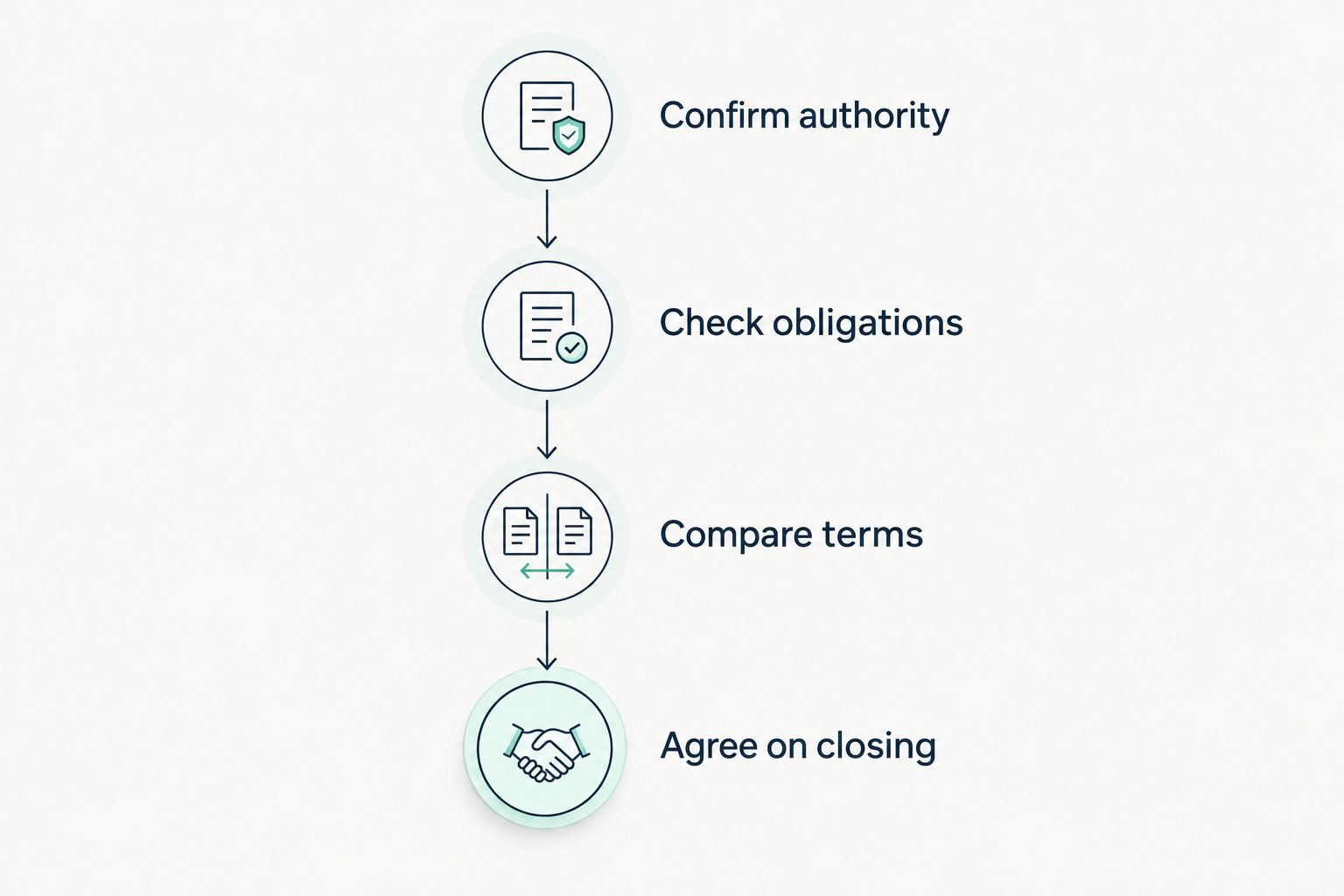
Use this sequence regardless of which selling method you choose. It keeps the buyer decision connected to the estate's legal and practical requirements.
Confirm authority
Find out how the property is titled and who can sign. Probate is the court-supervised process for administering an estate; whether it is required, and what permission a sale needs, depends on the circumstances and local law.
Being named in a will does not by itself establish that you can immediately sign a sale contract. Ask the estate attorney or appropriate local professional to confirm the required documents.
Check obligations
Gather information about the mortgage, property taxes, liens, insurance, utilities, and any occupants. Selling with an existing mortgage generally requires arranging payoff through closing; accepting an offer does not cancel the loan.
Tell the closing professional about known ownership questions early. A purchase agreement does not fix an unresolved title issue by itself.
Compare terms
Put offers side by side. Review inspection conditions, financing conditions, deposit terms, included belongings, seller expenses, and what happens if either party cannot proceed.
Ask for an estimated settlement statement showing the expected deductions. Treat the estimate as a planning document, not a guaranteed net amount.
Agree on closing
Discuss a target date after identifying the requirements that affect it. Court approvals, ownership documents, lender requirements, and the buyer's contract conditions all belong in that conversation.
A proposed date is not a guaranteed closing. Keep the people handling the estate informed before you commit to moving, clearing belongings, or distributing sale proceeds.
How these options are ranked
The 2026 ranking prioritizes decision fit rather than a promised sale amount or speed. An as-is agent listing ranks first for market exposure; a direct purchase serves sellers avoiding preparation; repairs suit project-ready owners; self-management suits hands-on sellers.
The criteria are authority, preparation, exposure, written terms, expected proceeds, and coordination. No route removes the need to confirm ownership and understand the contract.
Which way should you choose?
Start with an as-is agent assessment if you are undecided. Use that assessment to understand the listing work involved, then compare it with a written direct-purchase offer.
Choose repairs only after you understand their scope and purpose. Choose a direct sale when avoiding preparation matters enough to accept its trade-offs, and choose self-management only when you want the responsibilities that come with it.
For your 2026 decision, write down what matters most: market exposure, less preparation, control, or a workable closing plan. That makes it easier to evaluate an offer without pressure.
FAQ
What's the best way to sell an inherited house in 2026?
An as-is agent listing is the default starting point when you want broad market exposure without committing to repairs. A direct purchase fits sellers who prioritize avoiding listing preparation. Confirm authority to sell before committing to either route.
Can I sell an inherited house before probate is finished?
Whether you can sell before probate is finished depends on the estate, your authority, and applicable court requirements. Ask the estate attorney what documents or approvals are needed before signing a contract.
Do all heirs have to agree to sell an inherited house?
The required consent depends on ownership, estate documents, and local law. A beneficiary is not necessarily the person authorized to sign. Confirm decision-making authority before negotiating a binding sale.
Can I sell an inherited house as-is without cleaning it?
A direct buyer can agree to purchase an inherited house without cleaning or repairs. Put the agreed condition and treatment of remaining belongings in writing. As-is terms do not remove applicable disclosure requirements.
Is a cash offer better than listing an inherited house?
A cash offer is not automatically better than listing. Compare the preparation required, contract conditions, expected deductions, and closing requirements. A successful open-market sale can produce a higher amount than an as-is cash offer.
What happens to the mortgage when I sell an inherited house?
An existing mortgage generally needs to be paid off through the closing process. Ask the lender or closing professional for the payoff requirements. A buyer's offer does not erase the mortgage or other property obligations.
Will I owe taxes when I sell an inherited house?
Tax consequences depend on the property's basis, sale proceeds, and your circumstances. Inherited property generally has special basis rules. Have a qualified tax professional review the estate records rather than assuming the sale is tax-free.
One last thing
Keep the decision to sell separate from the decision about belongings. Ask each prospective buyer what can remain, what must be removed, and whether that agreement will appear in the contract.
An as-is offer is easier to understand when it describes the actual handover. This article provides general information, not legal, tax, or financial advice; get qualified local help with estate authority, disputes, or urgent foreclosure questions.