
Best default: a sale that covers your mortgage payoff and closes before the foreclosure sale. Best for comparing open-market offers: an agent-led listing. Best for avoiding repairs and showings: a direct as-is buyer. If you need to sell house to avoid foreclosure in 2026, start with the lender’s deadline—not a buyer’s promised closing date.
- To sell house to avoid foreclosure, confirm the lender’s deadline, mortgage payoff, and ownership requirements before accepting an offer.
- Polus Acquisitions Group fits homeowners seeking an as-is offer review, not a guaranteed foreclosure outcome.
- An agent-led listing supports open-market exposure; a direct buyer removes listing preparation but involves an offer trade-off.
- A short sale requires lender approval when proceeds cannot cover the mortgage debt and applicable transaction costs.
At Polus Acquisitions Group, we offer a free, no-obligation cash-offer review for a home sold as-is. You can consider that offer alongside a listing or another sale route. Requesting an offer does not obligate you to sell.
Why this matters
An accepted offer does not stop foreclosure. A signed purchase agreement and a completed closing are different events. Until the transaction closes or the lender confirms another arrangement, keep addressing foreclosure notices and lender requirements.
Your decision has two separate tests: whether the transaction can finish in time and whether its proceeds satisfy the debts and costs necessary to transfer ownership. An attractive offer fails if it cannot meet either test.
For a 2026 sale, confirm current state procedures and your loan’s status with your mortgage servicer and a qualified local attorney. A HUD-approved housing counselor can also help you understand mortgage-assistance options. Selling is a choice to evaluate, not your only possible response.
What makes the best pre-foreclosure selling option
Use these criteria before choosing a buyer or signing a listing agreement:
- Deadline fit: The closing plan must account for the scheduled foreclosure sale and any lender requirements.
- Payoff coverage: Compare proceeds with the current mortgage payoff, other liens, and applicable seller obligations.
- Buyer readiness: Ask for evidence of funds or financing and identify conditions that allow cancellation.
- Property preparation: Decide whether you can manage repairs, cleaning, inspections, and showings.
- Written terms: Review inspection rights, cancellation provisions, closing responsibilities, and any proposed changes.
- Seller control: Understand what you are signing and retain the choice to decline an offer before becoming contractually bound.
Selling options at a glance
The order below follows common decision points: preparation needs, market exposure, sale format, and insufficient equity. It is not a claim that one route produces the highest proceeds for every homeowner.
| Option | Best for | Standout feature | Key limitation |
|---|---|---|---|
| Direct as-is buyer | Avoiding listing preparation | Negotiating directly over the home in its current condition | The offer can be lower than a successful open-market sale |
| Agent-led listing | Comparing offers through market exposure | Marketing the property to prospective buyers | Showings, buyer financing, and contract conditions affect completion |
| Seller-arranged auction | Using a structured bidding process | Buyers compete under stated auction terms | Bidding does not guarantee an acceptable result or timely closing |
| Lender-approved short sale | Selling when proceeds cannot satisfy the mortgage debt | The lender considers accepting less than the amount owed | Approval and treatment of remaining debt require careful review |
1. Direct as-is buyer: best for avoiding listing preparation
A direct as-is buyer evaluates the home without requiring you to prepare it for a conventional listing. You negotiate a purchase agreement directly rather than first marketing the property through an agent.
Polus Acquisitions Group is a fit for homeowners who want an as-is home-sale offer review without repairs, cleaning, or staging. We explain the offer so you can decide whether its terms fit your situation. Our offers remain subject to inspection and transaction requirements.
Direct as-is buyer pros:
- You can discuss selling the property in its current condition.
- You avoid preparing the home for listing photos and public showings.
- You can ask the buyer directly about funding, inspections, and closing conditions.
- You can compare a written offer with another selling route before deciding.
Direct as-is buyer cons:
- An as-is cash offer can be lower than a successful open-market sale.
- Inspection findings and contract terms still matter.
- Title problems, lender requirements, or missing ownership authority can prevent the proposed closing.
For a Polus Acquisitions Group as-is home sale, our stated terms include no agent commissions or listing fees, with standard closing costs covered, subject to the written offer. Mortgage payoff, taxes, liens, and other seller obligations do not disappear.
Best for: You want to avoid listing preparation and assess a specific written offer.
Verdict: Choose a direct buyer when the offer and documented closing requirements fit—not merely because someone promises speed.
2. Agent-led listing: best for comparing open-market offers
An agent-led listing exposes the home to prospective buyers through a marketing process. You can discuss listing the property as-is rather than assuming you must complete repairs first.
Ask the agent to explain the proposed marketing plan, expected seller responsibilities, and how buyer financing affects the closing. In 2026, use current local comparable sales rather than an old valuation or an unsupported asking-price suggestion.
Agent-led listing pros:
- You can invite offers from buyers beyond a single direct purchaser.
- You receive help with marketing, negotiations, and transaction coordination.
- You can compare offers on terms as well as the amount offered.
- An as-is listing lets you disclose the condition without promising renovations.
Agent-led listing cons:
- Marketing and showings require coordination while the foreclosure process continues.
- Financing, appraisal, and inspection conditions create possible exit points for buyers.
- Listing-related expenses affect your net proceeds.
A listing is not a deadline extension. Before committing, ask what happens if the first buyer withdraws and whether the remaining time supports another contract.
Best for: You have time to market the property and want competing offers.
Verdict: Choose a listing when market exposure fits your confirmed deadline and you can manage the sale process.
3. Seller-arranged auction: best for a structured bidding process
A seller-arranged auction markets your home under stated bidding and purchase rules. It is different from the lender’s foreclosure auction: you are arranging a sale before the lender completes its process.
Review the auction agreement before assuming the event solves a deadline problem. Ask about the minimum acceptable result, seller obligations, buyer qualification, and the interval between bidding and closing.
Seller-arranged auction pros:
- The bidding process follows a defined format.
- Interested buyers evaluate the property under stated terms.
- You can ask how bidders demonstrate their ability to complete the purchase.
Seller-arranged auction cons:
- The result depends on participation and bids.
- An auction date is not the same as a closing date.
- The agreement can impose obligations even if the outcome disappoints you.
An auction buyer still needs to complete the transaction. Have the auction provider explain what happens if the successful bidder defaults or title cannot transfer on schedule.
Best for: You want a structured bidding format and understand its contractual risks.
Verdict: Consider an auction only after checking the full path from bidding to completed closing.
4. Lender-approved short sale: best for insufficient equity
A short sale is a sale in which the mortgage lender agrees to accept less than the mortgage amount owed. It requires lender approval; a buyer and seller cannot approve that debt treatment on their own.
This route addresses a different problem from choosing between a listing and a direct buyer. You can find a buyer through either method, but insufficient proceeds still require the lender’s agreement or another acceptable way to cover the shortfall.
Short sale pros:
- It provides a potential sale route when proceeds cannot satisfy the mortgage debt.
- The lender reviews a specific proposed transaction.
- Approval documents can establish how the lender will treat the unpaid balance.
Short sale cons:
- Lender review adds requirements outside the buyer’s and seller’s control.
- Approval does not follow automatically from receiving an offer.
- Remaining debt, tax consequences, and other liens need separate review.
Do not assume that accepting less at closing means the lender forgives the remaining debt. Ask a qualified local attorney to review the approval language and a tax professional to explain potential tax treatment.
Best for: Your expected proceeds cannot cover the mortgage debt and necessary transaction obligations.
Verdict: Pursue a short sale only with lender involvement and a clear explanation of the remaining obligations.
Confirm the sale can actually close
Before choosing an offer, gather 3 documents: the latest foreclosure notice, a current written mortgage payoff statement, and the proposed purchase agreement. The notice identifies the proceeding, the payoff establishes the mortgage amount needed, and the agreement establishes the buyer’s obligations.
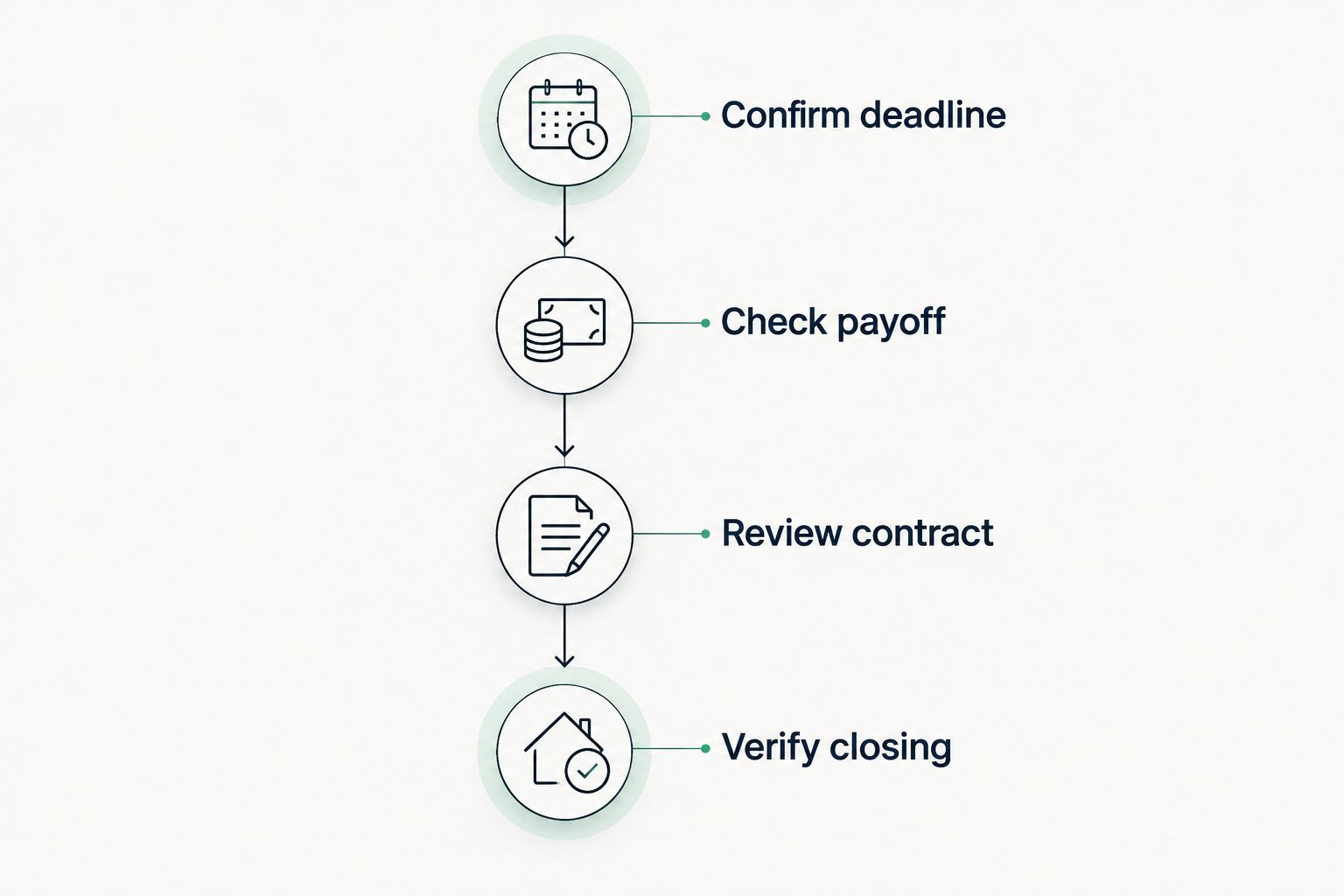
Use this sequence for your 2026 decision:
- Confirm deadline. Ask the servicer and local counsel to clarify the foreclosure sale date and any action needed before closing.
- Check payoff. Have the closing professional identify mortgage payoff, recorded liens, taxes, and other required amounts.
- Review contract. Identify inspection conditions, financing conditions, cancellation rights, and closing responsibilities.
- Verify closing. Confirm that the buyer, title or closing professional, and lender requirements support the proposed date.
Ask for 2 written net-proceeds estimates when comparing a direct offer with a listing proposal. Each should identify the assumptions and deductions used. Compare what you expect to receive after obligations, not just the headline offer.
Keep 1 confirmed foreclosure deadline visible in your planning documents, and update it only when an authoritative source confirms a change. A buyer’s reassurance is not confirmation that the lender has postponed a sale.
How these options are ranked
The ranking starts with preparation needs and then separates market exposure, auction structure, and lender-approved debt treatment. Each option earns its place through a distinct use case—not an unsupported promise about proceeds or closing speed.
Deadline fit and payoff coverage come before convenience. A lower-effort sale is not useful if it cannot complete the required transaction.
Which selling option should you choose?
Choose a direct as-is buyer if avoiding preparation matters most and the written offer meets your transaction needs. Choose an agent-led listing if you have time for market exposure. Investigate a short sale when the payoff calculation shows a shortfall.
If you cannot establish a workable closing path before the foreclosure sale, get qualified local help immediately rather than relying on an unsigned promise. Ask the mortgage servicer about available alternatives while evaluating the sale.
For a no-pressure discussion with Polus Acquisitions Group, contact us about your selling situation. You retain the choice to accept or decline an offer.
FAQ
Can I sell my house to avoid foreclosure in 2026?
You can pursue a sale before foreclosure, but receiving an offer does not stop the process. Confirm the applicable deadline, payoff requirements, and ability to complete closing with your servicer and a qualified local professional.
Is a cash buyer better than listing before foreclosure?
A cash buyer fits homeowners who want to avoid listing preparation; a listing fits homeowners who want open-market exposure. Compare written terms, expected net proceeds, and the ability to close within your confirmed deadline.
Does signing a purchase agreement stop foreclosure?
No, signing a purchase agreement does not itself stop foreclosure. Continue communicating with the mortgage servicer and obtain confirmation of any postponement or other arrangement.
Can I sell if I owe more than the house will bring?
A sale with insufficient proceeds requires a way to address the shortfall. A lender-approved short sale is one possible route, but approval and the treatment of remaining debt require review.
Do I need to repair my house before selling?
You can seek an as-is sale without completing repairs. As-is terms do not eliminate applicable disclosure duties, buyer inspection rights, or title and closing requirements.
What costs remain with a Polus Acquisitions Group offer?
Our stated terms include no agent commissions or listing fees and coverage of standard closing costs, subject to the written offer. Mortgage balances, taxes, liens, and other seller obligations still need to be addressed.
What if the foreclosure auction is already scheduled?
Confirm the scheduled sale date and seek qualified local legal help immediately. Ask the servicer about available options and do not assume a buyer's proposed closing date postpones the auction.
One last thing
The most useful question is not simply whether a buyer can close quickly. It is what must happen before that buyer can close. Ask for the remaining conditions in writing, with responsibility for each one clearly assigned.
For your 2026 decision, treat clarity as a requirement. An offer you understand is easier to compare—and easier to decline when it does not fit.
This article provides general information, not legal, tax, or financial advice. Foreclosure and ownership requirements depend on your circumstances and applicable law.