
Best for avoiding sale preparation: an as-is sale to a direct buyer. Best for market exposure: an occupied listing. Best for continuity: a sale to your tenant. To sell rental property with tenants in 2026, choose the route that fits the lease, your condition concerns, and your ability to coordinate access—not just the proposed closing date.
- To sell rental property with tenants, compare buyer requirements against the lease before accepting an offer.
- Polus Acquisitions Group offers an as-is review without requiring repairs, cleaning, staging, or an agent listing.
- An occupied listing provides market exposure but requires coordination around tenant privacy and access.
- Selling does not automatically end a tenant’s lease or remove local notice requirements.
- Compare expected proceeds, contract conditions, and responsibility for deposits before choosing a buyer.
Why this matters
You are selling a property, but someone else still calls it home. Your purchase agreement must work alongside the lease and applicable landlord-tenant rules.
Polus Acquisitions Group is for homeowners who want an as-is offer without preparing their rental for a listing. You can explore the Polus Acquisitions Group approach while comparing other routes; requesting an offer does not obligate you to sell. An offer remains subject to inspection and transaction requirements.
The right choice depends on what you need to avoid. Repairs, repeated showings, uncertain possession, and a prolonged ownership period are different problems. No single selling route removes all of them.
What makes the best way to sell an occupied rental?
Use these criteria to compare your options in 2026:
- Lease compatibility: Can the buyer accept the tenancy, or does the contract require lawful vacant possession?
- Preparation requirements: Must you repair, clean, stage, or coordinate work inside an occupied home?
- Access demands: What inspections, appraisals, photographs, or showings will require tenant cooperation and proper notice?
- Expected proceeds: What remains after transaction expenses, mortgage payoff, taxes, and other obligations?
- Closing conditions: Does the sale depend on financing, title clearance, inspections, or the tenant leaving?
- Tenant impact: How will the process affect privacy, housing stability, deposits, and communication?
Ask buyers to explain their requirements in writing. A proposed closing date means little if the contract also requires an outcome you cannot lawfully deliver.
Selling options at a glance
| Option | Best for | Standout feature | Key limitation |
|---|---|---|---|
| As-is direct sale | Avoiding listing preparation | A direct offer on the property’s existing condition | The offer can be lower than a successful open-market sale |
| Occupied listing | Seeking market exposure | Marketing to buyers who accept an existing tenancy | Showings and buyer requirements need coordination |
| Sale to your tenant | Preserving continuity | The occupant becomes the buyer | Interest does not establish financing readiness |
| Sale after lawful vacancy | Reaching buyers who require possession | Access without an occupying tenant | You must manage lawful departure and carrying expenses |
1. As-is direct sale: best for avoiding listing preparation
An as-is direct sale lets you discuss an offer without preparing the rental for a conventional listing. Tell the buyer immediately that tenants occupy the property, then provide the lease, payment history, deposit information, and known condition issues.
Polus Acquisitions Group offers an as-is cash-offer review without requiring repairs, cleaning, staging, or an agent listing. We explain the offer so you can accept or decline; inspection and transaction requirements still apply. Confirm whether the proposed purchase accepts the existing tenancy before signing.
As-is direct sale pros:
- Avoid preparing the home for a listing.
- Discuss condition and tenancy with the proposed buyer directly.
- Review a written offer before deciding whether to proceed.
As-is direct sale cons:
- An as-is cash offer can be lower than a successful open-market sale.
- Inspection, title, and occupancy conditions can still affect closing.
- A cash offer does not eliminate mortgage payoff or other seller obligations.
Our stated terms include no agent commissions or listing fees and coverage of standard closing costs, subject to the actual written offer. Those terms do not mean that taxes, liens, mortgage balances, or every seller expense disappear.
Best for: You want to avoid listing preparation and can evaluate the offer against your expected net proceeds.
Verdict: Skip any direct-sale contract that requires you to promise vacancy you cannot lawfully provide.
2. Occupied listing: best for market exposure
An occupied listing markets the rental while the tenant remains in place. An agent can present lease information and the property’s condition to buyers willing to consider an existing tenancy.
This route gives you market exposure rather than limiting your decision to a direct offer. It also requires a workable access plan. Discuss photography, notice, showing windows, and inspections before marketing begins.
Occupied listing pros:
- Seek offers through open-market exposure.
- Present lease terms to buyers interested in rental ownership.
- Compare offers with different financing and contract conditions.
Occupied listing cons:
- Repeated visits can disrupt the tenant and require careful scheduling.
- Buyers who need immediate occupancy might not fit the lease.
- Financing, appraisal, and inspection conditions can complicate the transaction.
Ask an agent how the property will be marketed without overstating rental income or promising possession. Use the actual lease and documented payment history, not projected performance presented as fact.
Best for: You want market exposure and can coordinate access while respecting the tenancy.
Verdict: Hold off on an occupied listing until the access plan and advertised occupancy terms match the lease.
3. Sale to your tenant: best for continuity
A sale to your tenant changes ownership without requiring that buyer to relocate. Start by asking whether the tenant wants to explore buying; do not assume interest, financial readiness, or an obligation to participate.
If the tenant is interested, use a written purchase agreement and an appropriate closing process. Keep rent, deposits, financing, inspections, and purchase obligations clearly separated.
Sale to your tenant pros:
- Give the current occupant a chance to pursue ownership.
- Avoid introducing an unrelated buyer into the home-search process.
- Discuss access directly with someone already familiar with the property.
Sale to your tenant cons:
- The tenant still needs a workable way to fund the purchase.
- An unsuccessful negotiation leaves the landlord-tenant relationship in place.
- Informal rent-credit or financing promises can create disputes.
If you consider seller financing, get qualified legal and tax guidance before agreeing to terms. Seller financing means you accept payment over time rather than receiving the entire purchase payment at closing; default and collection risks need explicit treatment. It is not a cash sale.
Best for: Your tenant wants to buy and can demonstrate a credible path to closing.
Verdict: Skip informal purchase promises; proceed only with documented terms and a workable funding plan.
4. Sale after lawful vacancy: best for possession-dependent buyers
A vacant sale means you market or close after the tenancy has lawfully ended and possession has been returned. Vacancy gives you access for preparation and allows you to consider buyers whose contracts require an unoccupied home.
Do not assume that listing the property, receiving an offer, or reaching a lease-end date automatically gives you possession. State and local requirements, lease provisions, and the circumstances of the tenancy control the process.
Sale after lawful vacancy pros:
- Schedule photography, repairs, and inspections without coordinating around occupancy.
- Consider buyers who require possession at closing.
- Assess the property’s condition after the tenant leaves.
Sale after lawful vacancy cons:
- Carrying expenses continue while the home is vacant.
- Repairs and preparation can add work before marketing.
- A delayed departure can conflict with a promised closing date.
A voluntary move-out agreement is different from eviction. Have qualified local counsel review any agreement involving payments, releases, possession dates, or disputed rights. Do not use lockouts, utility shutoffs, or pressure to obtain possession.
Best for: You have a lawful, realistic path to vacancy and can carry the property during the transition.
Verdict: Wait to promise vacant possession until you understand the legal process and timing.
Prepare the rental for a sale decision in 2026
You do not need to prepare the home for a listing to organize the transaction. Start with records and legal obligations, not cosmetic work.
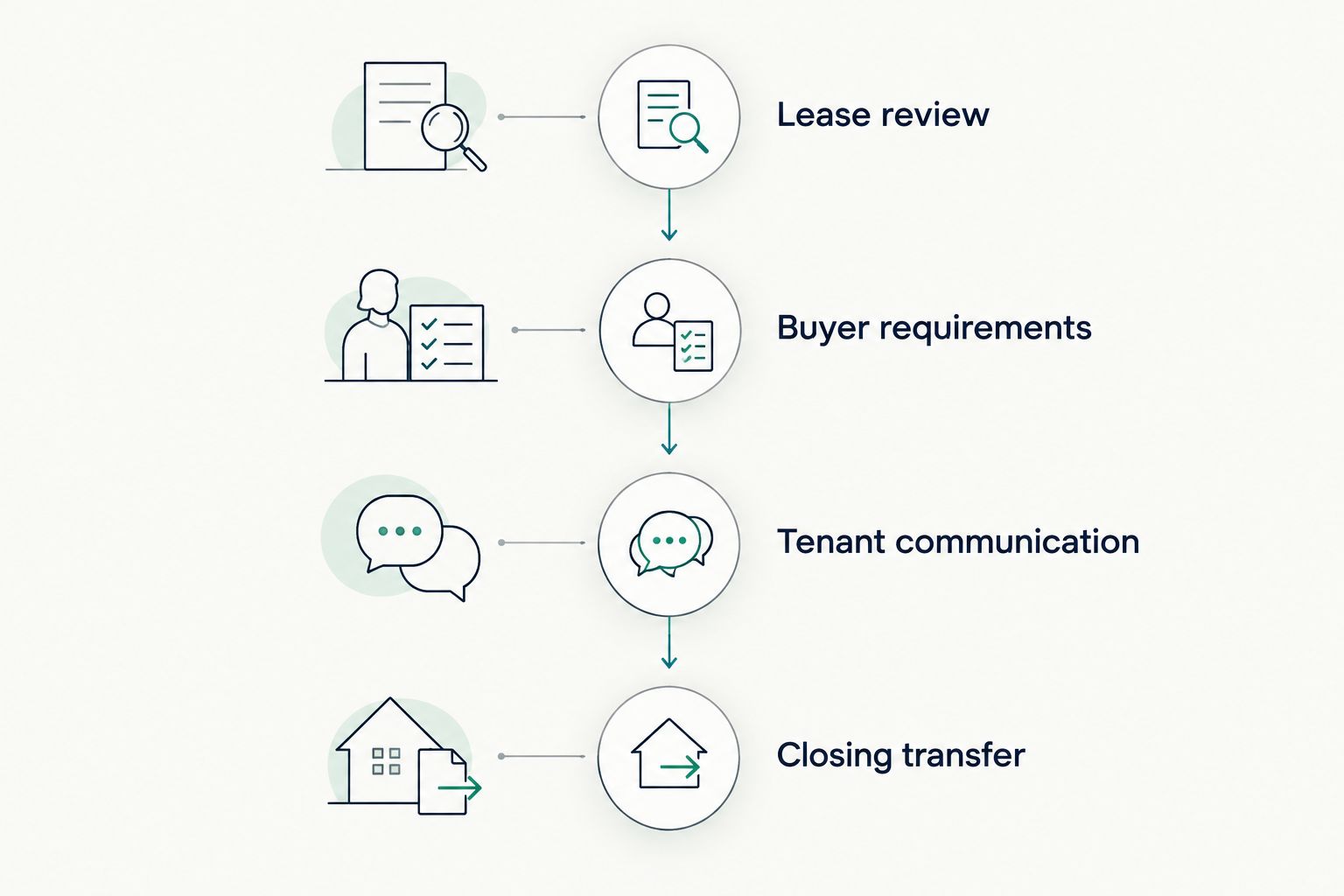
Lease review
Collect the signed lease, amendments, renewal documents, and any notices already delivered. Identify the lease term, access provisions, purchase rights, and responsibilities that affect a transfer. A sale does not automatically cancel an existing lease.
Buyer requirements
Ask whether the buyer accepts the tenancy and what access is needed. Put any requirement for vacancy, financing approval, or further inspection into the contract rather than relying on conversation.
Tenant communication
Explain that you are considering a sale and describe the access process allowed by the lease and local law. Avoid promising that a buyer will keep every arrangement unchanged. Share only confirmed information.
Closing transfer
Have the closing professional address deposits, rent allocation, required notices, keys, records, and management handover. The purchase agreement and closing documents should make responsibility clear.
Keep documentation factual. Record missed payments, maintenance requests, notices, and agreed access without exaggerating tenant conduct or concealing disputes from a buyer.
Compare what you keep, not just the offer
For a 2026 sale decision, compare the expected amount you retain and the obligations you accept. A larger headline offer is not automatically the better result if it requires repairs, extended ownership, or possession you cannot deliver.
Request a written estimate of seller proceeds from the appropriate closing professional. Check mortgage payoff, applicable taxes, transaction expenses, deposit treatment, rent allocation, and any agreed credits. Avoid treating a preliminary estimate as a guaranteed final amount.
Separate cash purchases from alternative arrangements. If a proposal involves payment over time or leaves an existing loan in place, understand who owes the lender, who controls the property, and what happens after missed payments. Get independent advice before accepting that structure.
If you want to discuss an as-is offer, use our contact page and explain the occupancy situation at the outset. Requesting a review does not commit you to selling.
How these options are ranked
This 2026 guide organizes options by the problem each solves: preparation, market exposure, tenant continuity, or vacant possession. The order does not establish a universal winner or predict your proceeds.
Lease compatibility comes first because a buyer’s preferred terms cannot erase tenant rights. Compare access demands, expected proceeds, and closing conditions next.
Which selling route should you choose?
Start by comparing an occupied-sale offer with an occupied-listing plan. This lets you evaluate selling without making tenant departure the starting assumption.
Choose an as-is direct sale if avoiding preparation matters most and the written terms fit your tenancy. Choose an occupied listing if you want market exposure and can support lawful access. Explore a tenant purchase when there is genuine interest and a credible funding plan; pursue vacancy only when the departure process is lawful and practical.
FAQ
Can I sell rental property with tenants still living there?
Yes, you can sell rental property with tenants still living there. The sale must account for the lease, applicable tenant protections, access requirements, and the buyer’s occupancy terms.
Does selling my rental automatically end the lease?
No, selling a rental does not automatically end the lease. Review the agreement and state and local law before promising that a buyer can take vacant possession.
Is a cash buyer better than listing an occupied rental?
A cash buyer is a better fit when the written terms meet your needs and avoiding listing preparation matters more than seeking open-market exposure. An occupied listing is another option when you can coordinate lawful access and want to compare market offers.
Can I ask my tenant to buy the house?
Yes, you can ask whether your tenant wants to explore buying the house. Keep the conversation voluntary and use a written purchase agreement with clear financing and closing conditions.
Do tenants have to allow showings when I sell?
Access rights depend on the lease and applicable state and local law. Confirm notice requirements and permitted access before scheduling showings, inspections, or photography.
What happens to the security deposit when I sell?
Security-deposit handling depends on applicable law and the closing arrangements. Document the amount, required transfer or accounting, and any required tenant notice with the closing professional.
Can Polus Acquisitions Group review an occupied rental?
You can request an as-is offer review and disclose that the rental is occupied. Explain the lease and any disputes; requesting a review creates no obligation to sell, and offers remain subject to inspection and transaction requirements.
Can I sell if my tenant is behind on rent?
You can pursue a sale when a tenant is behind on rent, but disclose the payment history and any pending proceedings. Get qualified local advice before making possession promises or taking action against the tenant.
One last thing
Read the possession clause before focusing on the closing date. A contract requiring a vacant home creates a different obligation from a contract accepting the existing tenancy, even when both propose the same closing day.
This guide provides general information, not legal, tax, or financial advice. For disputed tenancy, foreclosure deadlines, or estate authority, consult qualified local professionals before signing.